Malta is experiencing sporadic heat waves, accompanied by equally sporadic energy crises and blackouts. It’s not like summer is a surprise to anyone. It’s not like summer, with its stifling heat exacerbated by an equally stifling population explosion, is somehow an unexpected event. It rears its heated head every year, and every year the population melts under a sun unprotected by anything resembling a tree or in buildings built for the harsh Mediterranean sun.
Those of us who were born and raised in Malta some half a century ago remember hot summers when one could fry an egg on the sidewalk. Sans air conditioners and equipped with common sense and indigenous building ingenuity, we not only managed to survive but to thrive. What happened? What was the catalyst that has brought misery to this once vibrant, wonderful “pearl of the Mediterranean”?
In the early 1970s, the island was transitioning from a British military fortress to an independent country facing economic challenges. During this period, tourism was prioritized as a key resource to establish the country as a tourist destination for the rest of Europe. Initially, the primary visitors were mostly expatriate British tourists. However, with the emergence of five-star hotels and improvements in infrastructure, along with the establishment of a national airline (Air Malta) that expanded routes beyond the typical destinations of Britain and Italy, tourists began arriving from Germany, France, and other European countries.
Unfortunately, rather than embracing the cultural heritage of our ancestors, the governments of both political parties strayed from this path. This shift led to a decline in the island’s character, charm, and sensible development practices. They opted for cheap entertainment and quick monetary gain instead of focusing on historical significance and quality tourism.
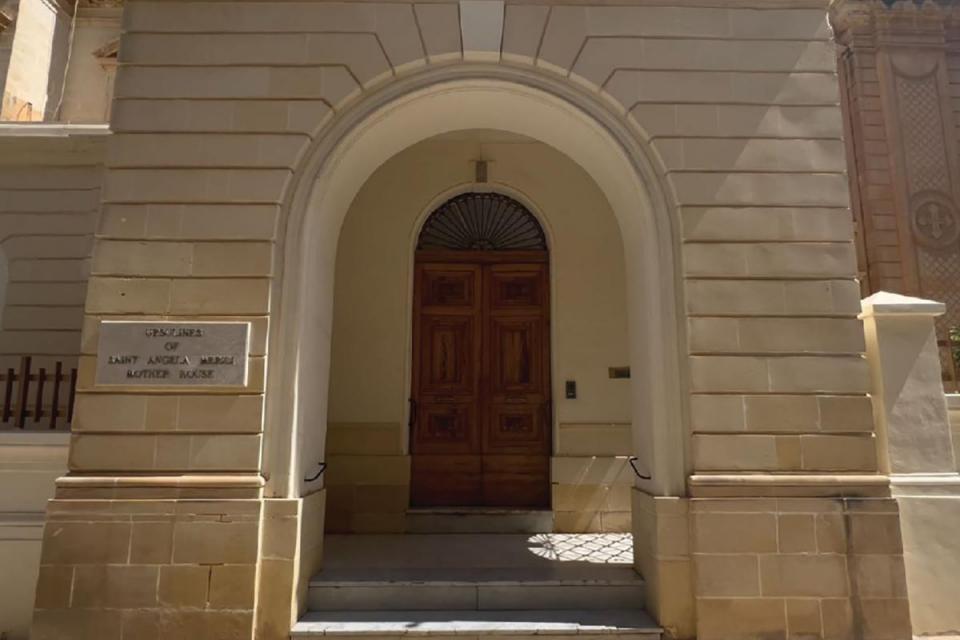
The older Maltese homes were built of limestone for a purpose. They kept out the heat. Wooden shutters that sealed the houses in the summer cooled the homes naturally. This, combined with cool tile floors and high ceilings, allowed fresh air to flow through the homes and enabled cross-ventilation between rooms and floors. Even balconies had wooden shutters, as did schools and offices.
Modern architects made significant changes to housing designs by removing balconies and wooden shutters and replacing them with glass and aluminum. They lowered ceiling heights and eliminated heat-resistant features in homes. Additionally, they substituted traditional Malta stone with cement and steel, which resulted in houses that felt excessively hot, like rotisseries. This shift created a demand for air conditioning in residences. The introduction of glass elements increased heat retention, particularly in high-rise buildings, and the consequences of these changes are well-known today.
The destructive transformation of the island has continued. Over the past decade, the government has adopted the belief that larger, taller, and louder structures are better. An island that should have a population of around 350,000 has now surpassed half a million residents. This number does not include the several million tourists who visit each year. The effects of unchecked development have transformed many areas, especially in the densely populated eastern regions, into concrete jungles devoid of trees and green spaces. There are even rumors that the government fears the growth of grass, believing it could overtake these barren landscapes!
As the population grew, traffic congestion, air pollution, and noise increased, compounding the already sweltering summer heat and raising temperatures both outside and inside homes. This situation was further exacerbated by the widespread use of air conditioners, which hum persistently through neighborhoods, expelling hot air and noise.
The final building block of a grid that cannot support population growth is the electric car. The issue of blackouts is compounded by vehicles being plugged in for hours, supposedly to reduce air toxicity and improve the environment. This raises a crucial question: Where will the electricity come from to charge these vehicles for extended periods? If you answered fossil fuels, you are correct. The strain on the grid does not account for the increased fossil fuel consumption needed to generate the electricity for electric cars, which are intended to help us move away from fossil fuels. This paradox is rarely addressed by environmental activists who promote these misguided ideas without acknowledging the underlying truths.
The blame game between political parties is disingenuous because both are at fault. The “modernization” of Malta began under the Nationalist Party after the British left and has continued to oscillate between parties up to the present day. The current Labor government has exacerbated the situation by introducing a foreign labor economy and promoting growth in the building sector under the guise of tourism and economic development. However, a decade of unchecked development—much of it questionable—has turned Malta into a landscape marred by construction and environmental degradation. This has contributed to rising mental health issues and summer heat exhaustion.
We have reached a point where ministers are telling a frustrated and fed-up population to tolerate the annual summer blackout situation by suggesting that blackouts occur not only in Malta but in other countries as well. However, this is little consolation for a population that is already struggling for personal space, clean air, unpolluted beaches, and dealing with constantly under-repair infrastructure. Such a justification for incompetence is unprecedented. It is not as if summer takes Malta by surprise.
The opposition party has condemned the blackouts, but they have not offered any viable solutions. Neither the government nor any political party has produced sustainable answers to a problem that causes significant distress every year. A few weeks ago, in an interview with the Times of Malta, the Prime Minister claimed that the Maltese people are doing well because more boats and cars are being purchased. This statement comes at a time when many are facing serious issues, such as horrific traffic that results in long delays over just four miles and air pollution from exhaust, construction dust, and the unpleasant smell of diesel motors in the bays and shorelines where people are trying to relax and escape from the chaos created by him and his associates.
The situation is possibly dire because the damage is so severe and beyond repair that no solutions remain. Emotions are running high, as demonstrated by an incident where a man nearly killed two police officers. He first attempted to set fire to a scaffolding with workers on it and then proceeded to shoot at the police. This event did not happen in a vacuum; it reflects the growing frustration of a population desperate for change and accountability, which they feel they have not received.
One could argue that people get what they vote for. The last election serves as a prime example of a majority that prefers partisanship over intelligence. Instead of choosing the best candidate, they vote strictly along party lines. Even when their party leads them to disaster, they remain loyal, all while risking the destruction of Maltese heritage, culture, and sanity. The elections were conveniently scheduled before the peak of summer heat, a time when blackouts have become a common issue for the most densely populated areas of the island. So, the “get what you deserve” mantra is not far off the truth. There was a choice and it was obviously taken in the dark.
For those of us who left the island decades ago with the intention of returning for retirement and tranquility, we are beyond disappointed. We are shocked by the complete ruin of what was once a beautiful island. The stunning views of the surrounding Mediterranean and the abundance of fields and greenery have disappeared, replaced by concrete and towering buildings. There is little, if anything, to come back to. The Maltese charm of small cafes, grocery stores, and the peacefulness of quiet afternoons is gone.
While other countries are reclaiming their indigenous cultures to attract tourists, Malta appears to be moving in the opposite direction and risking the loss of its heritage. Islands like Sicily are now focusing on sustainable authenticity, promoting tourism that emphasizes nature and landscapes. They refer to this approach as ¹”mindful tourism.” This concept is gaining traction among other Mediterranean countries as part of a Blue Tourism Initiative, which seeks to celebrate the beauty of nature and the charm of small village life, all while harmonizing with local culture and heritage.
From Morocco to Tunisia, Mediterranean nations are actively countering unchecked tourism that undermines the image they wish to present. ²These destinations are drawing visitors who are looking for a culturally enriching and environmentally friendly experience that is both historically significant and mentally rejuvenating. Unfortunately, Malta seems to have overlooked this valuable opportunity.
Is it too late? Perhaps. On the other hand, there is still time to put quotas on cars entering the country, deferring development for five years, and putting the brakes on a tourism sector that creates more problems than benefits. Stop the cheap flights that bring garbage disguised as tourism to the island. In the past weeks, residential areas have been plagued by the cheap tourist industry of youth whose mission in life is pervert behavior that creates mayhem and destruction of property. Add to the list curtailing development in seaside localities, which causes overwhelming stress on infrastructure such as drainage. The Sliema/St. Julian’s swimming areas have been plagued by foul smell and seeping drainage for the past several years.
The Maltese residents living in various tourist locations have often been overlooked, to the point of being considered irrelevant and, at times, a nuisance. Paceville, which was once a popular summer destination for many Maltese city dwellers half a century ago, has now deteriorated into a hub of clubs, noise, trash, crime, and violence.
³Comments made by Phillip Fenech, Chairman of the Paceville Town Center Management team, in December 2025 to the Times of Malta reflect a narrow-minded political perspective in the face of a glaring crisis. Mr. Fenech believes that Paceville is a national success story, but such a blatant disregard for the reality facing local residents is not only unethical; it borders on corruption.
While Katy Perry performed on stage at the Floriana bastions under bright lights, the rest of the Maltese population sweltered in the heat and remained in darkness. This situation reflects a “let them eat cake” attitude from the government, demonstrating a clear disrespect for citizens who endured days without electricity. The Minister of Energy’s attempt at justifying the blackouts by claiming that other countries also experience them shows a lack of understanding of the situation. I want to inform Ms. Dalli that I have lived in Germany for 41 years, enduring both freezing winters and July heatwaves, and I have never experienced a blackout. Such disregard for constituents is reminiscent of a third-world authoritarian regime, where the ruler lives in luxury while citizens are expected to accept their dismal circumstances.
I feel sorry for the younger generation who will never experience the Malta that we once knew. We enjoyed wonderful summers on clean beaches, walked barefoot on cool tiles in our Maltese homes, and cherished quiet summer afternoons when we closed our shutters to escape the heat and the world. Those moments provided a sense of mental serenity that we all loved, but sadly, that has been lost forever. Unless the vicious cycle of greed and destruction is stopped, this once idyllic island will cease to exist in its indigenous state. A painful prediction from those of us who left and always dreamed of returning.
¹Sustainable Sicily: authentic villages and mindful tourism – Visit Sicily
²Rethinking tourism in the Mediterranean – Story | IUCN
³A strategic response to Paceville